
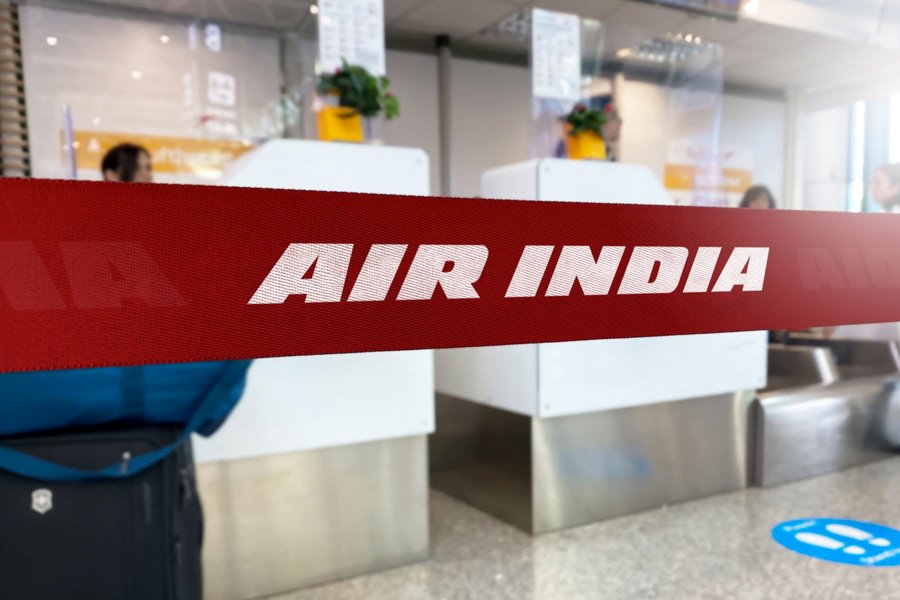
The directive is among the sternest interventions in recent months involving a full-service scheduled airline.
New Delhi:
The Directorate General of Civil Aviation (DGCA) has mandated the immediate dismissal of three senior officials from Air India, including a divisional vice president, from all duties associated with flight crew scheduling and rostering. This directive represents one of the most stringent interventions in recent months concerning a full-service scheduled airline. Additionally, the DGCA has instructed the Tata Group-owned airline to commence internal disciplinary actions against the three unnamed officials without delay. Non-compliance may lead to severe repercussions, including the potential revocation of the airline’s operating license.
The DGCA’s decision is a result of its audit of Air India’s Integrated Operations Control Centre (IOCC), which manages crew assignments across the airline’s domestic and international routes. As per the show cause notice issued by the regulator, two flights operated by Air India – AI133 from Bengaluru to London Heathrow on May 16 and May 17 – surpassed the maximum allowable flight duty time of 10 hours. The operation of these flights breached Para 6.1.3 of the Civil Aviation Requirement (CAR), Section 7, Series J, Part III, Issue III, dated April 24, 2019, according to the show cause notice.
The flights in question were not classified as emergency or exceptional operations. The DGCA asserts that they were standard long-haul services.
A show cause notice was issued to Air India’s Accountable Manager, who is typically a senior official. The notice requires a response within seven days from the date of receipt, requesting an explanation as to why enforcement action should not be taken under the applicable regulations.
“Failure to submit your response within the specified timeframe will result in the matter being resolved ex parte based on the evidence available on record,” the regulator cautioned.
In response to the directive, Air India has recognized the gravity of the concerns raised by the DGCA.
Air India has acknowledged the directive issued by the regulator and has acted upon the order. In the meantime, the Chief Operations Officer of the company will oversee the Integrated Operations Control Centre (IOCC) directly. Air India has expressed its commitment to ensuring complete compliance with safety protocols and standard practices,” the airline stated.
The IOCC serves as a crucial element within any airline’s framework, tasked with real-time management of crew, flight dispatch, weather observation, and route planning. Any errors or failure to comply with regulations at this level can have a direct impact on the safety of passengers and the welfare of the crew.
Understanding The Rules
1. According to DGCA regulations, pilots operating in a cockpit must fulfill specific qualification criteria to be paired together. These criteria encompass factors such as the total number of flying hours logged by each pilot, ensuring that their combined experience in the cockpit meets a designated minimum threshold.
2. Both pilots are also required to be qualified for particular operational needs, such as low-visibility operations, ‘Atlantic qualifications’, or clearances for operating in high-altitude or critical airfields like Leh or Ladakh.
3. Valid Licenses: It is essential for the airline to verify that both pilots in command fulfill all licensing prerequisites. Their licenses must be valid, and all required refresher courses and proficiency evaluations must be current.
4. Systemic Failures: There are signs of recurring breaches of Flight Duty Time Limitation (FDTL) regulations. These breaches include the necessity to provide pilots with sufficient rest prior to a flight and adherence to similar guidelines.
Questions Being Raised
1. Why are these violations not detected by the software systems?
2. Why are such issues not anticipated or prevented before pilots commence their flights?
3. This raises concerns about the potential for manual overrides of automated systems. Is there manipulation occurring within the rostering process?